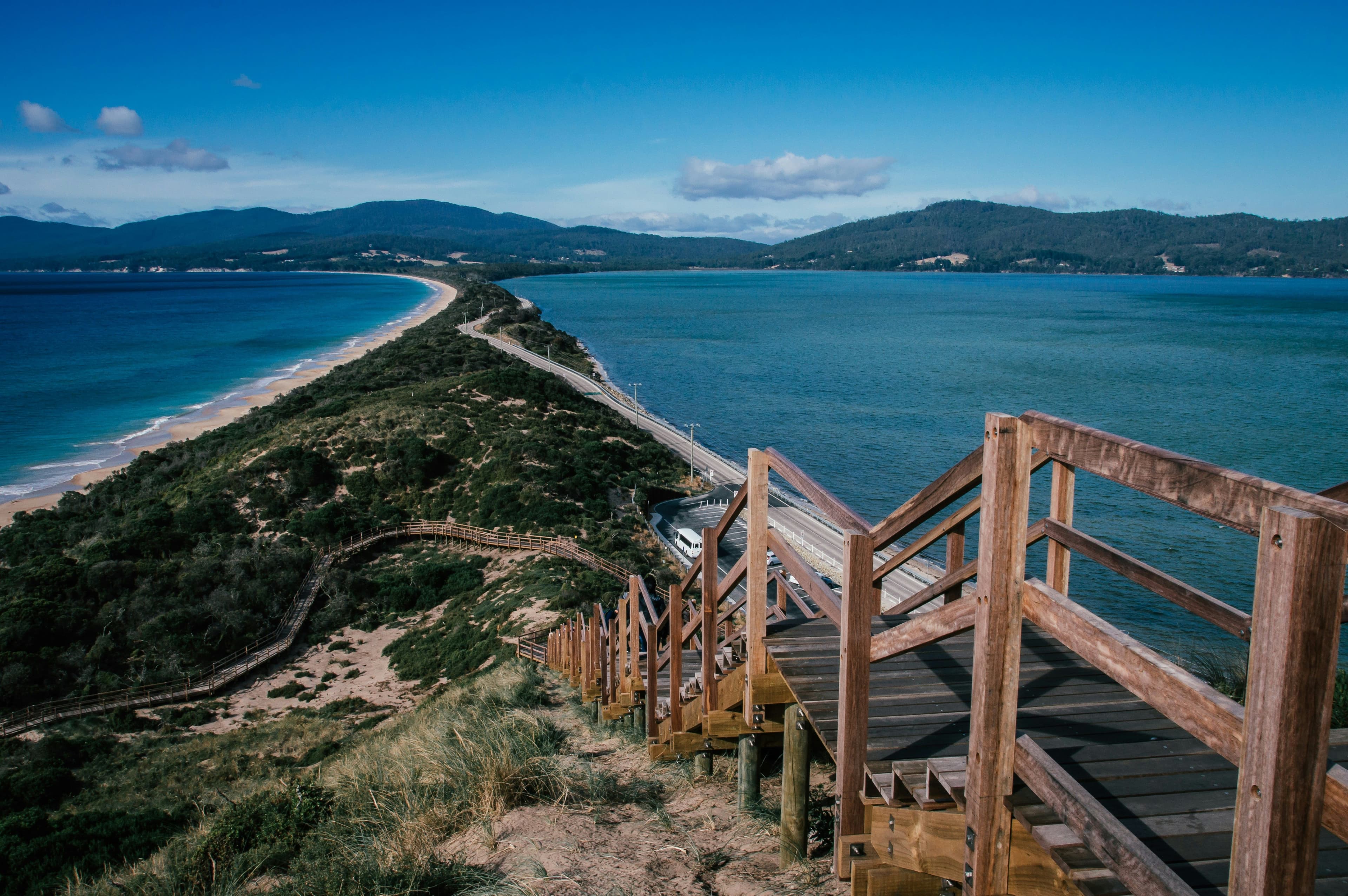
Bruny Island

Discover
Tasmania’s edge is simple: wilderness is always within reach. In a single day you can swap a city breakfast in Hobart for coastal cliffs, alpine tarns or temperate rainforest. That compact variety makes planning easy and travel time low. Small towns and short distances mean you don’t need a fortune to see a lot. Hostels are cheaper than mainland cities; dorms typically run $25–40 a night and campsites $10–20 per person. Budget hack: split a campervan or hire a small car with 2–3 mates — you’ll cut accommodation and transport costs while sleeping close to national parks and free roadside camps.
Things to know
Top 4 things you need to know before travelling to Tasmania
Public buses cover cities and some coastal routes, but national parks and the west coast need a car. Hire a small car or campervan in Hobart, Launceston or Devonport; split costs with mates to get undercut hostel nights. Long-distance coaches (Redline/Tassielink) link major towns and take luggage; Spirit of Tasmania ferry runs Melbourne–Devonport if you need a vehicle.
Tassie is famously changeable: think layers, a waterproof, and warm nights even in summer. Check the Bureau of Meteorology before alpine walks. Mountain tracks can be icy outside summer; carry a map, extra food and a charged power bank — mobile coverage is patchy on many trails.
Supermarkets: Coles and Woolworths in major towns; buy staples and cook in hostel kitchens to save. Dorm beds usually cost $25–40; basic campsites $10–20pp. Petrol is expensive in remote areas—share driving, plan routes, and refill in towns like Devonport, Burnie or Hobart to avoid premium rural prices.
Peak season is December–January and school holidays—book hostels and ferries early. Shoulder months (Oct–Nov, Mar–Apr) give better weather-to-price balance. If you want casual work, get a Tax File Number, open an Aussie bank account and check seasonal fruit and hospitality jobs in the Huon Valley and north-coast orchards.
FAQ
Common questions backpackers ask about Tasmania
For warmer weather and long daylight, visit Dec–Feb; expect crowds and higher prices. Shoulder seasons (Oct–Nov, Mar–Apr) often give milder conditions, cheaper accommodation and fewer people on popular walks.
You don’t strictly need one if you stick to Hobart/Launceston and use coaches, but a car or campervan is essential for remote parks, the West Coast and flexible day hikes. Campervans split between 2–4 people are the most budget-friendly option.
Expect roughly $50–80/day: dorm $25–40, groceries and cooking $10–20, local transport $5–15. Major attractions or guided tours add extra. Sharing transport and using hostel kitchens keeps you at the low end.
Yes, but take common-sense precautions: avoid solo driving at dusk (wallabies), tell someone your route for remote hikes, carry adequate water and check track conditions. Mobile signal can be unreliable outside towns—download offline maps.